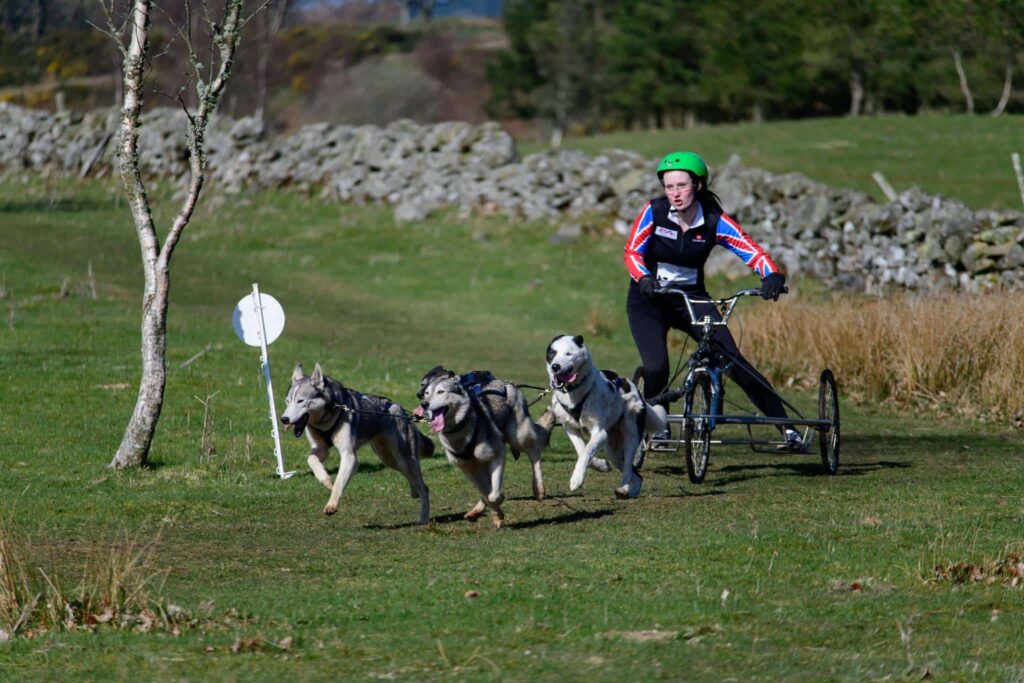
A Guide to Sled Dog Racing
Welcome to the world of sled dog racing, where the bond between dogs and drivers meets real outdoor excitement. This sport blends teamwork, training, and fast trail action, creating a memorable experience for spectators of all ages.
Whether you are watching a sprint race on dryland rigs or a winter event on snow, you will see dogs running with enthusiasm and focus. Their energy builds as teams prepare to launch, filling the air with the sound of eager paws and clear, confident commands.
As a spectator, you play an important part in keeping the event safe and enjoyable. This guide explains the etiquette that helps races run smoothly and gives every dog the space and support they need. By following these tips, you can enjoy the racing while helping create the best environment for both teams and spectators.
Types of Sled Dog Events
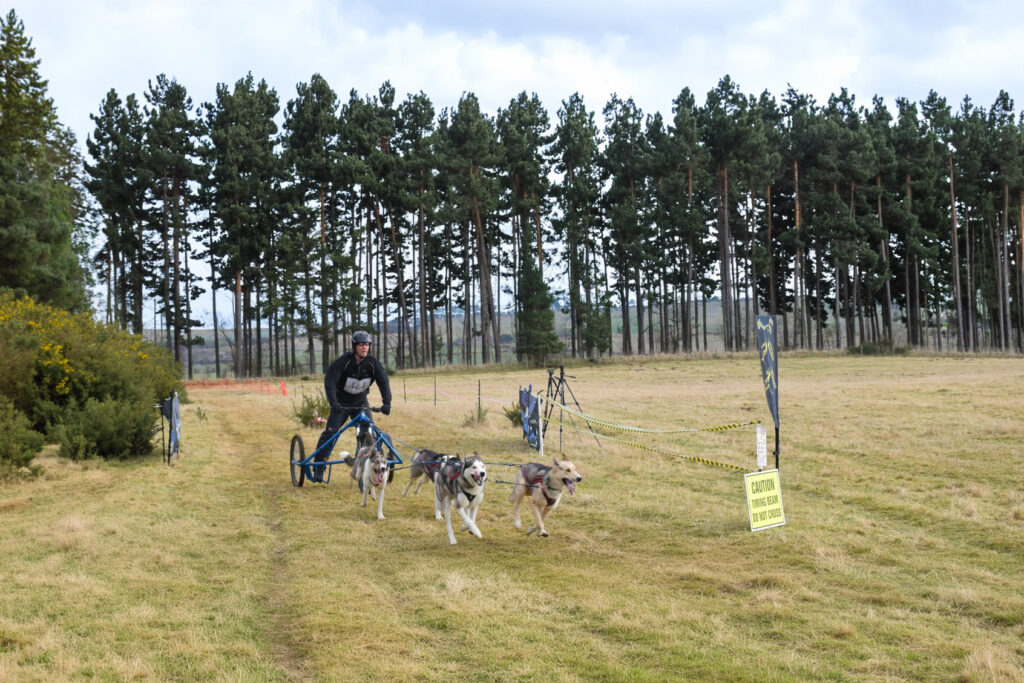
Sled dog racing in the UK takes place mostly on dryland trails rather than snow. Events are typically held on forest tracks, estate roads, and open countryside where teams can run safely over natural terrain.
While the equipment differs from traditional snow sled racing, the same principles remain: dogs running in harness, working together as a team, guided by the musher along a marked course.
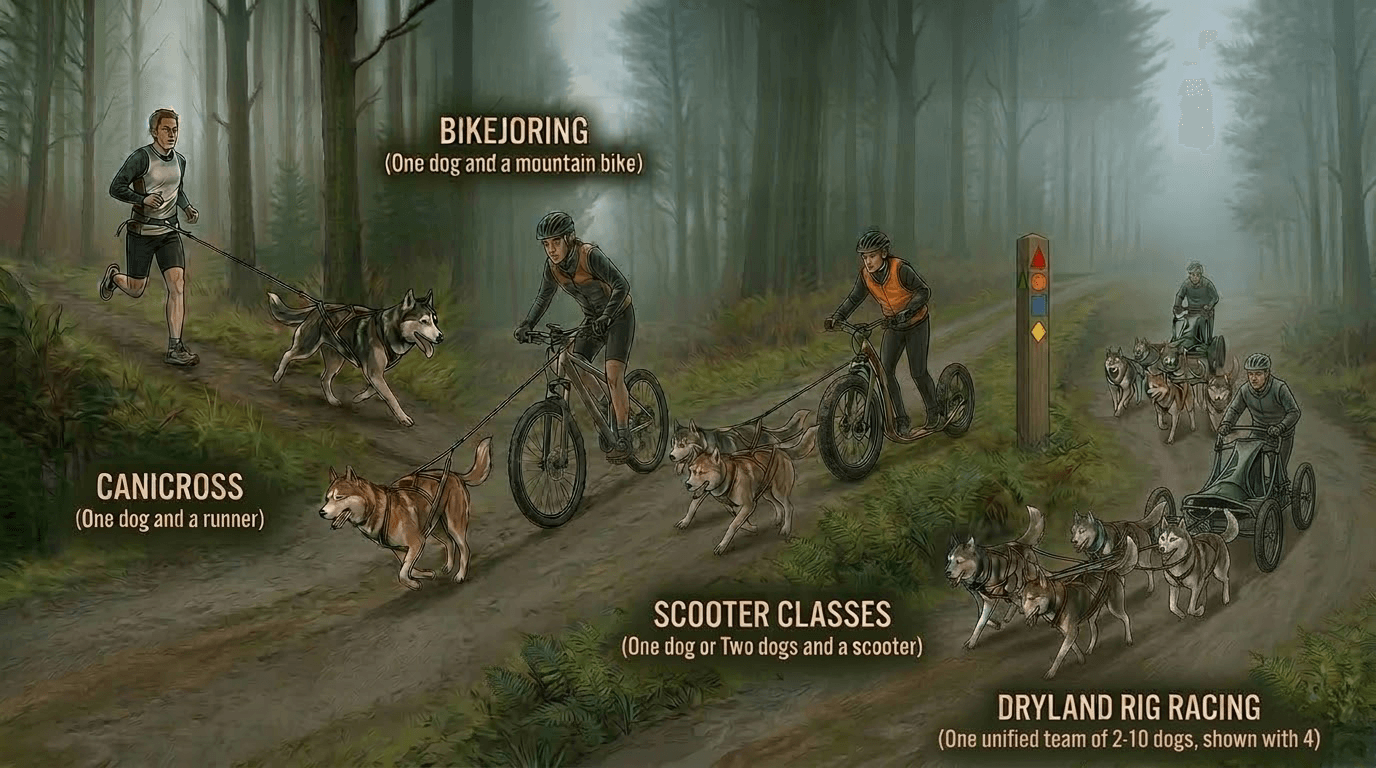
Most race weekends include several different classes depending on the number of dogs and the type of equipment used.
Canicross
Canicross is one of the most accessible sled dog sports. A runner is connected to a single dog using a waist belt and a bungee line. The dog runs in front and helps pull the runner along the trail. Races are usually fast and technical, often taking place on narrow forest paths and cross-country trails.
Bikejoring
In bikejoring, a single dog pulls a mountain bike using a specialised line attached to the bike. A small antenna mounted on the handlebars keeps the line away from the front wheel. The rider pedals while the dog pulls, making this one of the fastest classes in dryland racing.
Scooter Classes
Dog scooters are large off-road scooters with strong brakes and wide tyres. One or two dogs pull the scooter while the rider balances and occasionally assists by kicking. Scooter classes are a popular step up from canicross and allow handlers to run dogs without needing a full team.
Rig Racing
Rig racing uses a lightweight four-wheeled cart pulled by a team of dogs. Teams are commonly made up of four, six, or eight dogs depending on the race class. This format most closely resembles traditional sled racing and is often the most dramatic event to watch.
Junior and Novice Classes
Many race organisers include classes designed for younger handlers or newcomers to the sport. These races allow people to gain experience and confidence while learning race procedures and safe handling of their dogs.
Although the equipment and number of dogs may vary, the goal is always the same: a well-trained team running together, responding to their musher’s commands, and navigating the course as efficiently as possible.
General Etiquette & Safety Guidlelines
Watching a sled dog race is a fun and lively day out for families. These guidelines help everyone enjoy the action while staying safe.
- Never offer treats to racing dogs
- Avoid approaching nervous dogs
- Ask permission before petting dogs
- Keep children under supervision
- Stand back from the trail
- Follow all race official instructions
- Keep your pets on a leash
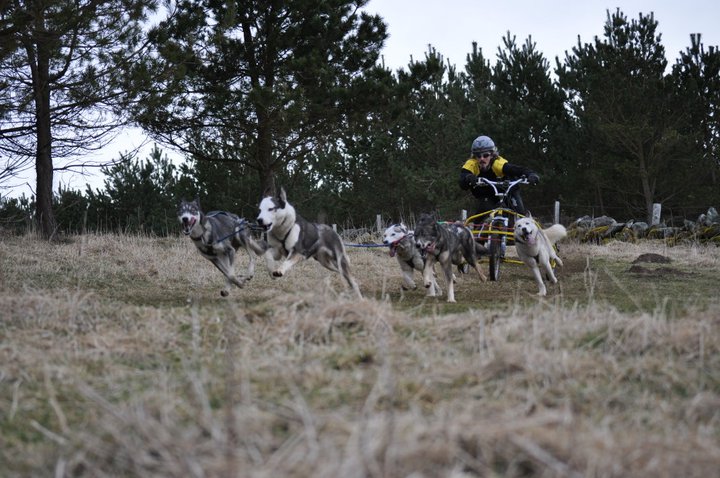
Essential Etiquette For Spectators
These simple points help everyone enjoy the racing while giving the dogs the space they need.
The Dogs
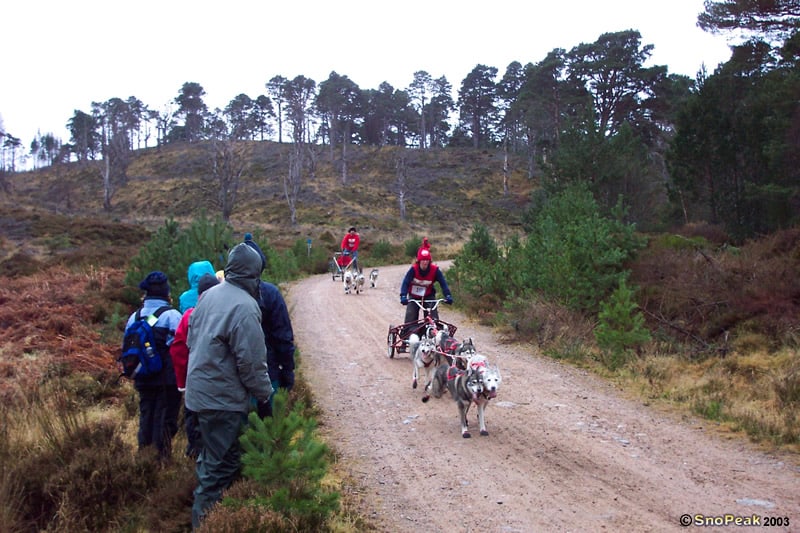
Many newcomers are surprised by the range of dogs used in sled dog racing. Arctic breeds like Siberian Huskies, Malamutes, Samoyeds, and Greenland Dogs are common, but you will also see fast crossbreeds such as Pointers, Trail Hounds, and Alaskan Huskies. These dogs were developed for speed, stamina, and teamwork.
Racing dogs may look different, but they share the same athletic traits. Strong backs, deep chests, tough feet, and lean bodies help them cover long distances at speed. Drivers monitor each dog carefully and keep them at a healthy working weight.
Despite old stereotypes, racing dogs are not aggressive. Teams are selected for calm, friendly temperaments and an ability to stay focused around noise and crowds. Drivers and veterinarians work closely on health, nutrition, and parasite control to keep the dogs in top condition.
Training starts young. Pups learn to pull in the correct direction, behave well in harness, and work smoothly with teammates. Some dogs grow into leaders while others excel in support positions. Trust, patience, and clear communication are the foundation of every successful team.
Sled Dog Team Positions and Lines Explained
One of the first things people notice at a sled dog race is the long line of dogs stretching out ahead of the rig. Every dog is connected in a specific way so the team can pull efficiently and respond quickly to the musher’s commands.
At the centre of the system is the gangline. This is the main line that runs from the rig or sled all the way to the lead dogs at the front of the team. The gangline carries the pulling force of the entire team and keeps everyone moving in the same direction.
Each dog wears a specialised pulling harness. From this harneass a short line called a tug line connects the dog to the gangline. When the dog runs forward in the harness, the pulling force transfers through the tug line and helps move the rig along the trail.
Dogs run in pairs, one on each side of the gangline. A small connector called a neck line links the collars of the two dogs in each pair. This helps them run together and keeps them aligned with the gangline.
A typical team is arranged in several positions, each with a different role.
When everything works well, the gangline stays tight and the dogs move as a single unit. From the outside it may look like simple running, but each dog is working in coordination with the others and responding to the musher’s commands.
This teamwork between dogs, equipment, and musher is what allows sled dog teams to move quickly and smoothly along the trail.
Lead Dogs
The lead dogs run at the very front of the team. They listen closely to the musher’s voice commands and guide the entire team around corners and junctions. Good lead dogs are intelligent, focused, and able to ignore distractions on the trail.
Swing Dogs
Swing dogs run directly behind the leaders. Their job is to help guide the team through turns and support the lead dogs when the trail bends or changes direction.
Team Dogs
These dogs make up the middle of the team. They provide the steady pulling power that keeps the rig moving smoothly along the trail.
Wheel Dogs
Wheel dogs run closest to the rig. They help stabilise the vehicle and are important when navigating tight turns. These dogs are usually strong and confident because they feel the most movement from the rig behind them.
On the start line
The start of a race is busy and noisy. Dogs are excited, handlers are moving quickly, and the musher is trying to keep the team steady. These are some of the common calls you will hear just before the start.
Line out!
The team holds the gangline tight and straight ahead of the rig. Dogs lean forward into their harnesses but must stay in place until the start.
Countdown calls
Race officials begin the countdown to the start. Handlers move clear of the team while the musher prepares to release the brakes.
Hike!
The command to start the run. The musher releases the brakes and the team launches forward together down the trail.
Straight on
Command given at a junction telling the lead dogs to keep running forward rather than turning left or right.
During the race
Once the team is on the trail, the musher uses short voice commands to guide direction, control speed, and manage passing on the course.
Gee
Command telling the lead dogs to turn right at a junction or bend in the trail ahead.
Haw
Command telling the lead dogs to turn left at a junction or bend in the trail ahead.
Come Gee
Turn right in a wider arc rather than a sharp corner. Used when the trail curves gradually.
Come Haw
Turn left in a wider arc rather than a sharp corner. Used when the trail curves gradually.
Easy
Instruction for the team to slow down and reduce pace without stopping completely.
Steady
A softer version of easy, asking the team to maintain control on technical or narrow sections.
Whoah
Command for a full stop. The team should halt and stand still until given another instruction.
On by
Instruction telling the dogs to ignore a distraction or team being passed and keep moving forward.
Leave It
Instruction to ignore something on the trail such as wildlife, dropped food, or spectators.
Straight on
Command used at a junction telling the lead dogs to continue straight rather than turning.
Trail
Call used when approaching another team to signal that you intend to pass.
Thank You
Not a command, but something many mushers say when another team moves aside to allow a pass.
Understanding Sled Dog Race Trail Markers
Sled dog race courses are marked with coloured signs placed along the trail. These markers guide teams safely around the course and allow mushers to see upcoming turns while travelling at speed.
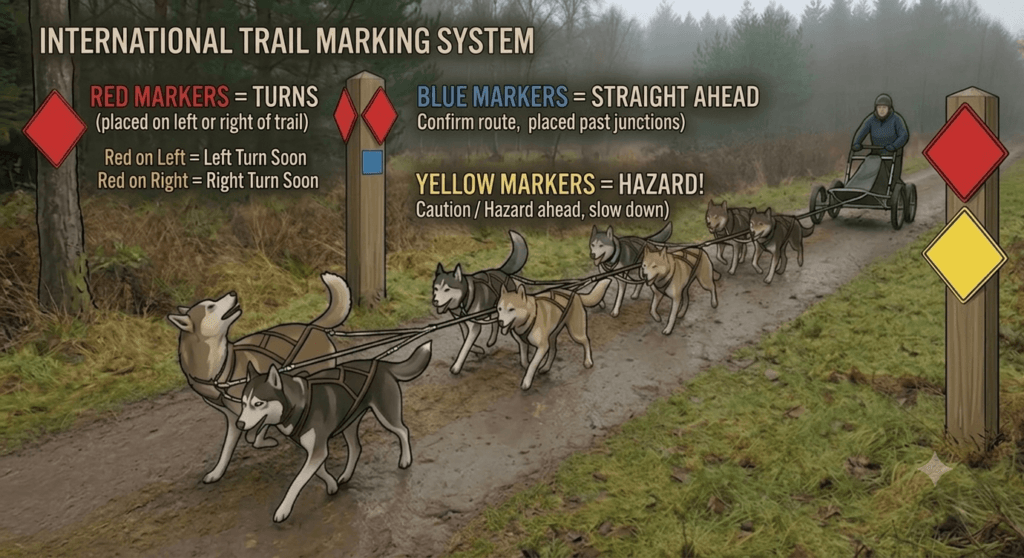
Lead dogs are trained to follow the trail, but the markers give both dogs and drivers clear visual confirmation of the correct direction.
Most races use a simple colour system that can be understood quickly, even when moving fast.
Red markers indicate a right-hand turn. These are usually placed before the corner so the musher and lead dogs can prepare for the change in direction.
Green markers indicate a left-hand turn. Like the red markers, they are placed before the turn so teams have time to adjust their line through the corner.
Blue markers indicate that the trail continues straight ahead. These are often used at junctions where several tracks meet, confirming the correct route.
Yellow markers warn of hazards on the trail. This could include a sharp bend, a steep descent, a narrow bridge, or another section where teams need to slow down and stay controlled.
Markers are usually placed on the same side of the trail so they remain visible as the team approaches. On technical courses, several markers may appear together to make sure drivers can see the correct route clearly.
For spectators, watching how teams approach these markers can be one of the most interesting parts of the race. Lead dogs read the trail ahead, while the musher calls commands to guide the team smoothly through the turn.
Experience the Speed and Energy of Sled Dog Racing
Watching a race is the best way to understand how it all comes together. The noise, the speed, and the teamwork between musher and dogs are something you really need to experience in person.