
Getting Started with Sled Dog Sports
You need a variety of specialised equipment to participate in sled dog sports. Whether you’re planning to race competitively or simply enjoy recreational mushing, having the right gear ensures both safety and success on the trails.
From properly fitted harnesses and protective booties for your dogs to sleds or training rigs for different conditions, this guide will help you understand the essential equipment needed to get started.
If all of this seems a bit overwhelming or you’re just looking for a simpler way to exercise your dog and have fun together, have a look at our Scooter Guide as well.
Rig
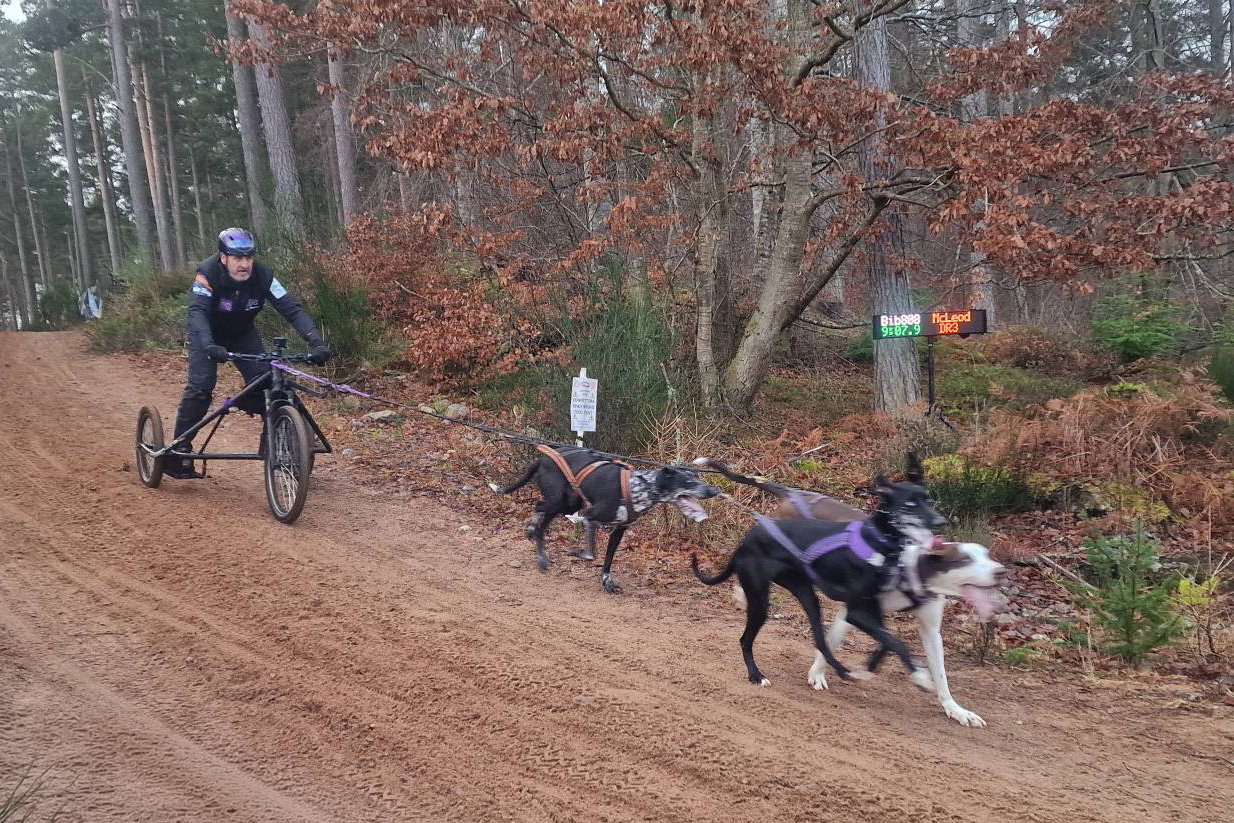
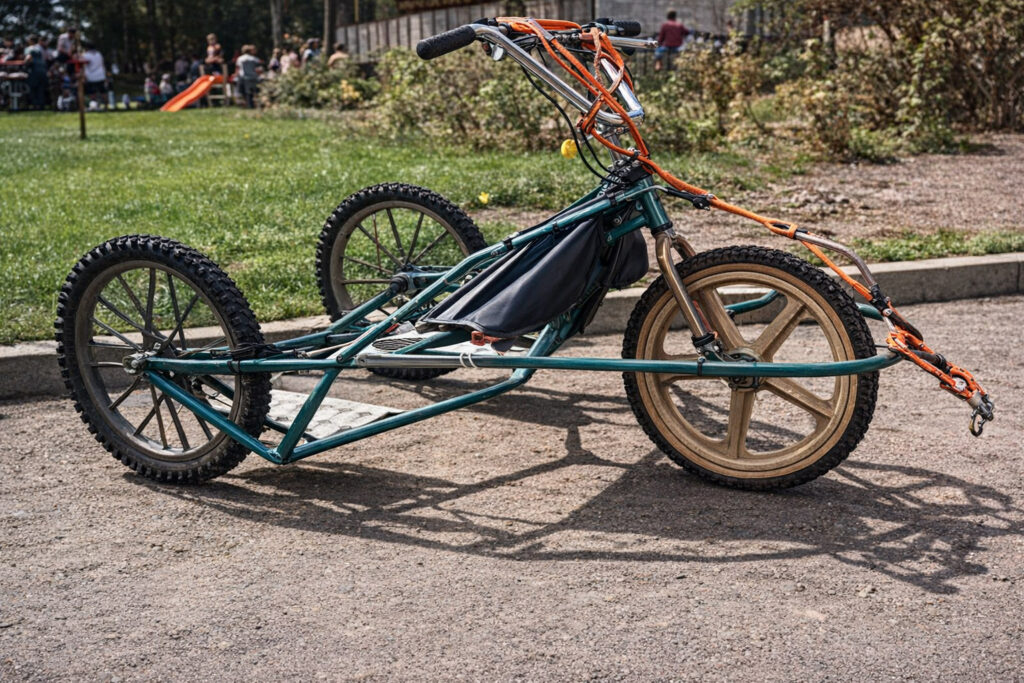
Rigs are three-wheeled vehicles that the dogs pull during dryland mushing. As the most expensive piece of equipment, rigs are built for durability, control, and speed, often made from lightweight yet sturdy materials like aluminium or steel. They feature handlebars, brakes, and a platform for the musher, providing stability and maneuverability on rough terrain.
Usage Tips: Choose a rig that matches your experience level and the type of trails you’ll be using. Regularly maintain the brakes, tires, and frame to ensure safety and performance. Consider starting with a rig that has adjustable components, allowing you to customise the ride as you gain more experience.
Importance: A high-quality rig is essential for dryland mushing, offering the control and stability needed to navigate trails at speed. While rigs are perfect for dry conditions, you may also want to invest in a sled for winter racing on snow.
Scooter
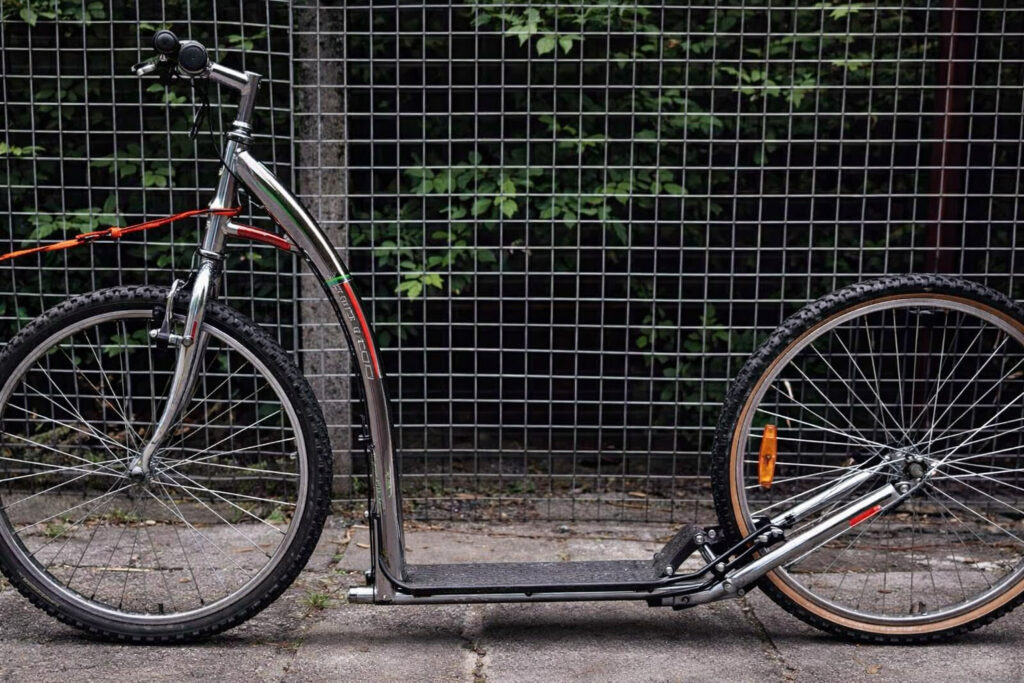
Scooters are two-wheeled, bike-like items used for lightweight training in dryland mushing. They are designed to help dogs build strength and stamina while offering the musher a simple, agile way to guide the team. Scooters are typically made from lightweight materials like aluminium, with a platform for standing, handlebars for steering, and a brake system for control.
Usage Tips: Start with short training sessions to get your dogs accustomed to the scooter. Ensure the handlebars and brakes are properly adjusted for comfort and safety. Choose a scooter with durable tires suitable for various terrains.
Importance: Scooters are ideal for lightweight training, allowing you to work on your dogs’ fitness and responsiveness in a controlled environment. They are perfect for training runs where you don’t need the full rig, helping you gradually build your team’s strength and coordination.
Harnesses
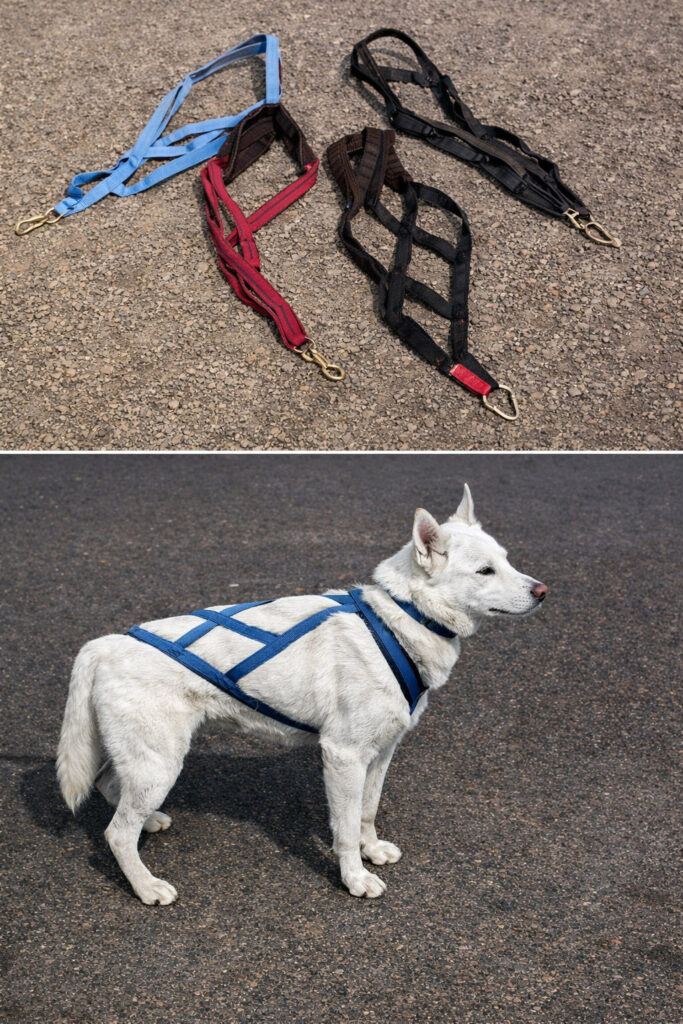
Harnesses are the most crucial piece of equipment in sled dog racing, designed to distribute the dog’s pulling force evenly across their body. They come in various designs, such as X-back, H-back, and half-harnesses, each suited for different types of dogs and racing conditions.
Usage Tips: Ensure the harness fits snugly without restricting movement. Regularly check for wear and tear, as a well-maintained harness is key to your dog’s comfort and performance.
Importance: A properly fitting harness prevents injury and maximises your dog’s power and efficiency, making it essential for both short sprints and long-distance races.
Gangline
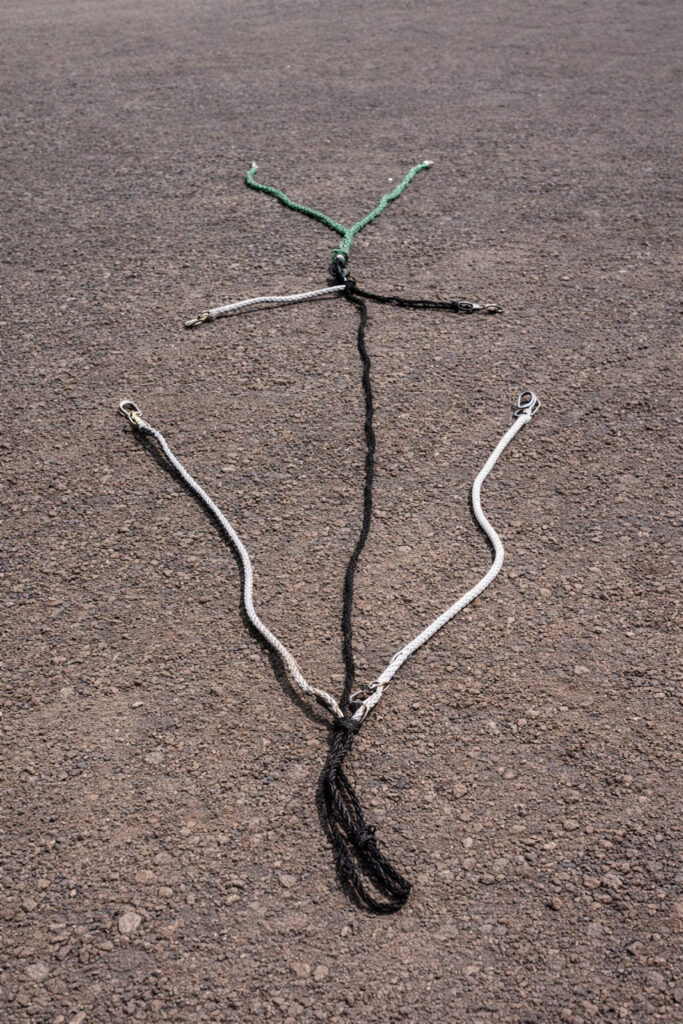
The gangline is the main line that connects the rig to the dogs. It runs from the rig, where it attaches via a carabiner, to each dog’s harness, ensuring that the team pulls in unison. Ganglines are designed to be durable and flexible, accommodating the strength and movement of the dogs.
Usage Tips: The length and configuration of the gangline will vary depending on the number of dogs you wish to run. For example, a two-dog gangline won’t be suitable for running three dogs, so you’ll need a different line for larger teams. Regularly inspect the gangline for wear and tear, and ensure all connections, including the carabiner at the rig, are secure before starting a run.
Importance: A well-maintained gangline is essential for keeping your team safely connected to the rig and operating as a cohesive unit. Having the correct gangline for your team size ensures smooth, controlled runs and prevents tangles or accidents.
Carabiner
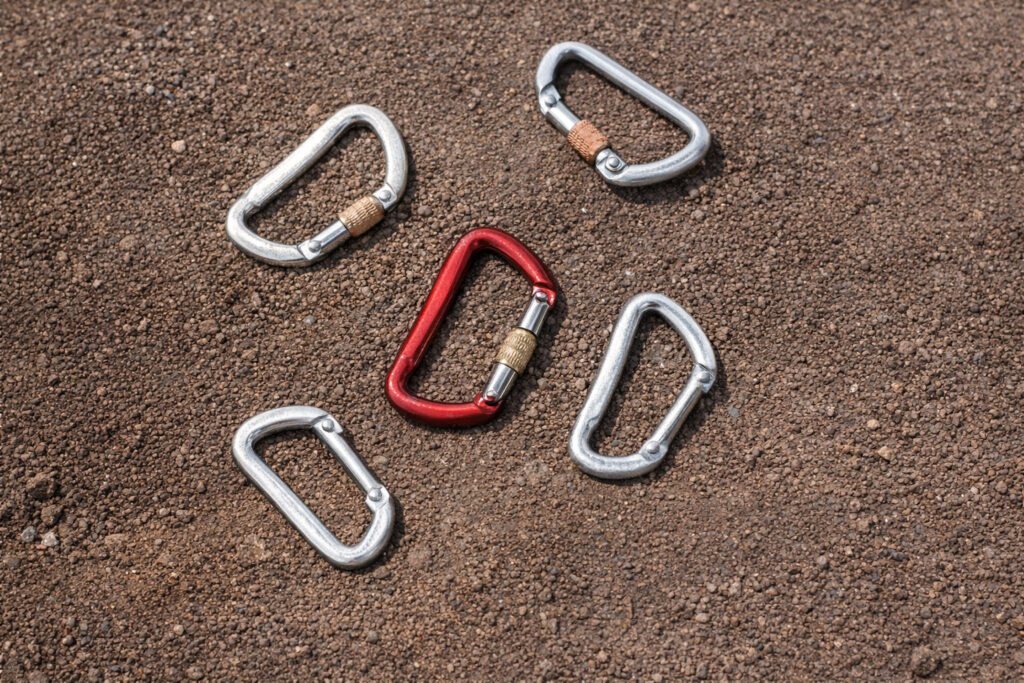
The carabiner is a strong, durable clip commonly used in mountaineering, repurposed here to connect the gangline and shock absorber (bungee) to the rig. Made from high-strength materials like aluminium or steel, the carabiner provides a secure and reliable connection, ensuring that the gangline stays firmly attached to the rig during runs.
Usage Tips: Ensure the carabiner is properly secured to the rig before each run. Regularly check it for signs of wear, such as cracks or deformities, especially if it’s exposed to harsh conditions. Opt for a carabiner with a locking mechanism for added security.
Importance: The carabiner is a critical component of your setup, as it holds the gangline and shock absorber in place. A strong, reliable carabiner ensures that your team stays connected to the rig, preventing accidents and maintaining control during your runs.
Neck Line
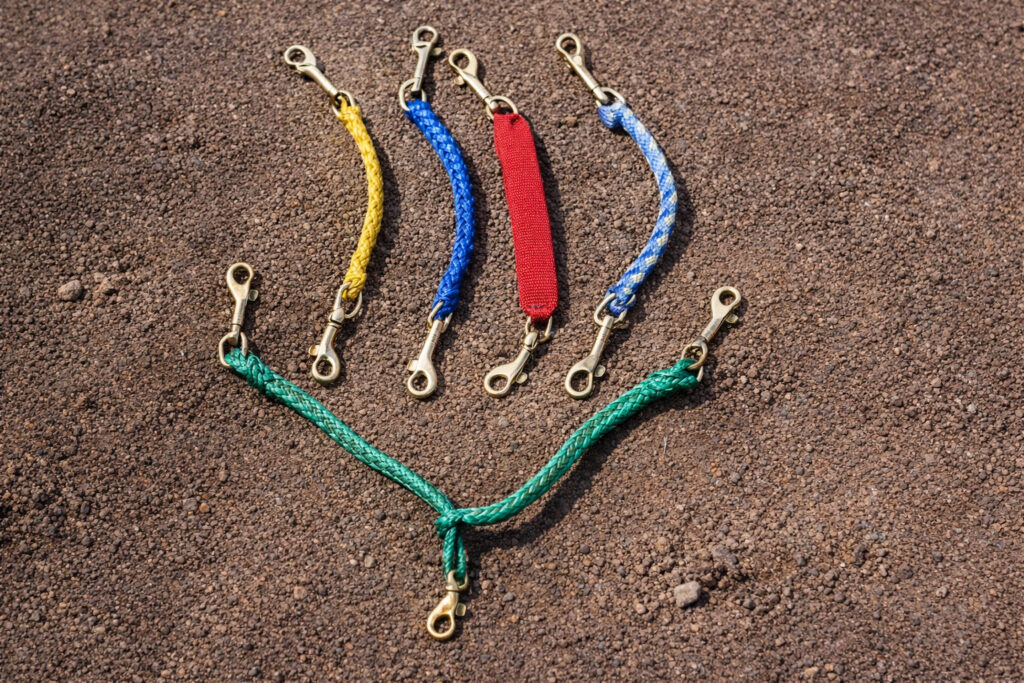
The neck line is a shorter line with clips on either side, designed to connect the collars of two dogs. This line keeps the dogs running together in the same direction, ensuring they stay aligned and work as a cohesive team.
Usage Tips: Attach the neck line to the collars of two dogs that are paired to run side by side. Ensure the clips are securely fastened and that the line is the appropriate length to allow for comfortable movement without tangling. Regularly check for wear and replace the neck line as needed.
Importance: The neck line plays a crucial role in maintaining team coordination, helping to keep the dogs focused and aligned as they pull the rig or sled together.
Shock Absorber/Bungee
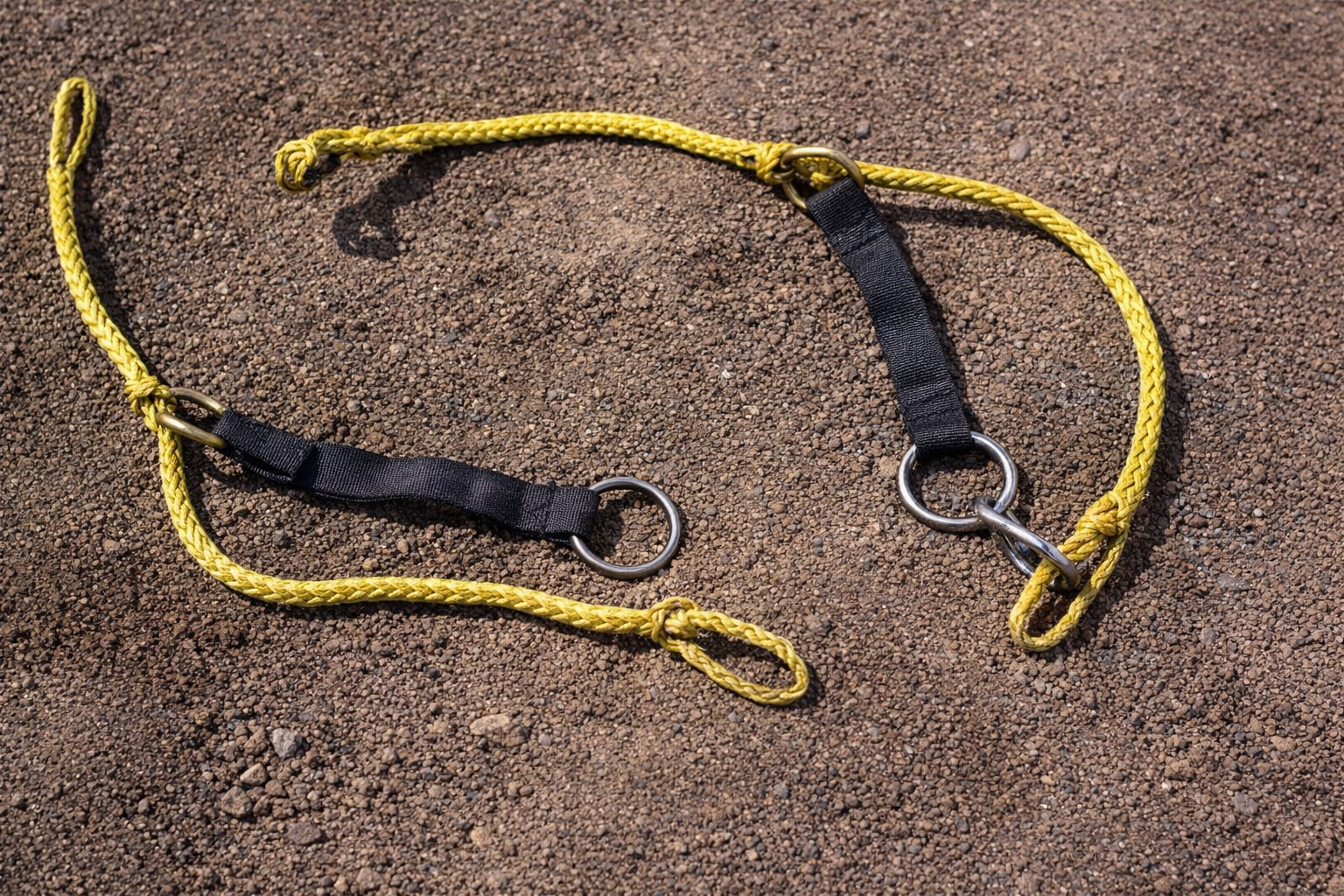
The shock absorber, or bungee, is a slightly stretchable line that helps reduce the impact on the dogs when they start running. One end of the bungee is connected to the carabiner on the rig, while the other end is attached approximately one foot away on the gangline. This setup allows the bungee to absorb some of the initial force, preventing a sudden jerk when the dogs take on the full weight of the rig and musher.
Usage Tips: Securely attach one end of the bungee to the carabiner and the other to the gangline at the recommended distance. Ensure the bungee is in good condition and provides adequate stretch without compromising control. Replace the bungee if it shows signs of wear or loss of elasticity.
Importance: The shock absorber is essential for the comfort and safety of the dogs, as it smooths out the transition when they start pulling, reducing strain and helping them maintain a steady, controlled pace right from the start.
Snub line
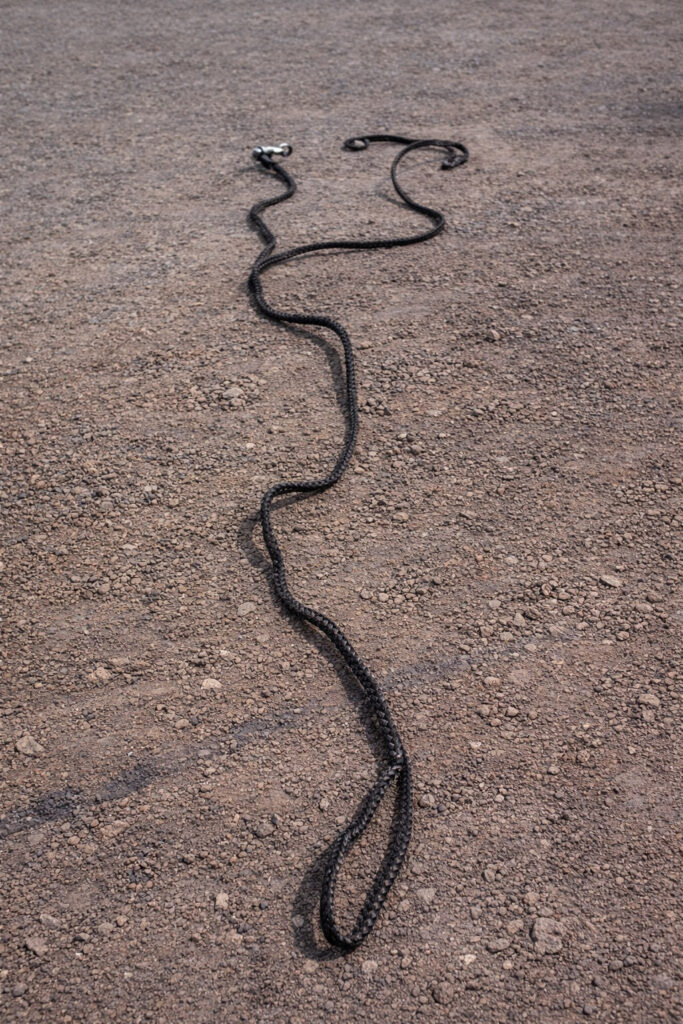
A heavy-duty line designed to secure the rig to a stationary object while preparing the team for a run. One end attaches to a solid anchor point (tree, post, or vehicle), while the other connects to the sled via a specialized quick-release mechanism. The line needs to be strong enough to restrain an excited dog team yet allow for immediate release when needed.
Usage Tips: Choose a sturdy anchor point that can withstand the full force of your team. Attach the quick-release mechanism so it’s easily accessible from your position on the sled. Always test the release mechanism before each run to ensure smooth operation. Keep the line free of knots or tangles that could interfere with quick release.
Importance: The snub line is critical for safe team preparation, preventing premature starts while hooking up dogs to the gangline. Its quick-release feature allows for controlled departure once the team is ready, protecting both dogs and musher from potential accidents. Without a proper snub line setup, managing an excited team during preparation would be extremely challenging and potentially dangerous.
Dog Boots
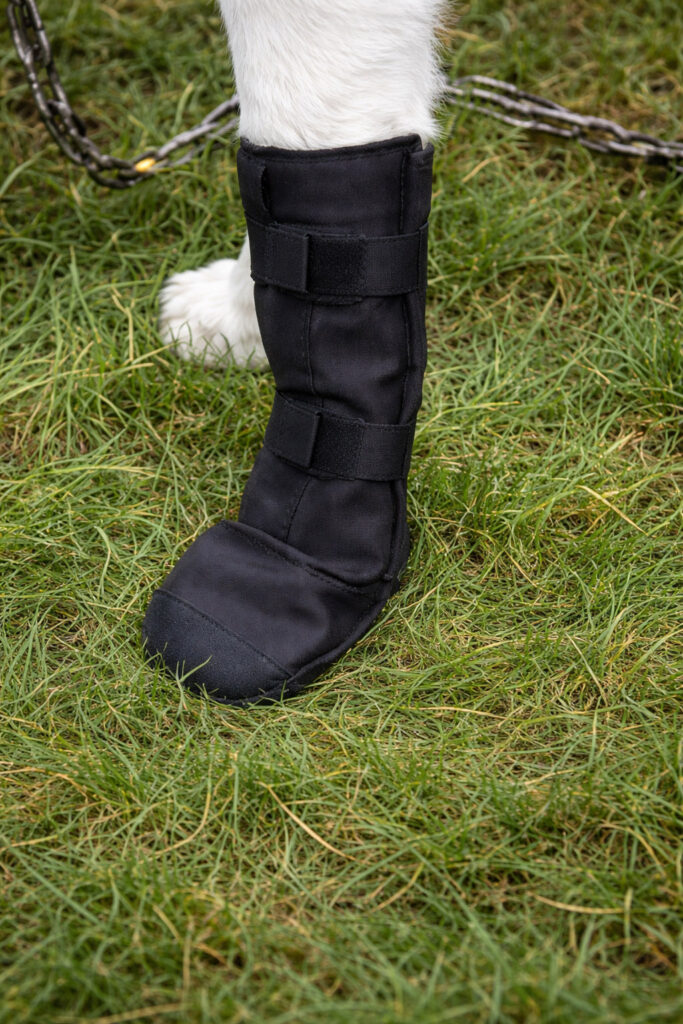
Protective footwear designed specifically for sled dogs to prevent pad injuries during runs. These boots are typically made from durable, water-resistant materials like Cordura nylon or similar fabrics, with secure fastening systems to keep them in place. They come in various sizes to accommodate different paw sizes and can be used on either front paws, back paws, or all four depending on the need.
Usage Tips: Measure each dog’s paws carefully to ensure proper fit – boots that are too tight can cause circulation issues while loose ones may fall off. Put the boots on just before running to prevent the dog from trying to remove them. Check and adjust the fasteners regularly during breaks. Carry spares as boots can occasionally come off during runs. After use, clean and dry the boots thoroughly to prevent degradation of the material and eliminate any ice buildup.
Importance: Dog boots are essential for protecting paw pads from various hazards including sharp ice, abrasive snow conditions, rough terrain, and extreme temperatures. They help prevent cuts, splits, and wear on paw pads that could sideline a dog from running. While not all dogs need boots in all conditions, having them available and knowing when to use them is crucial for maintaining a healthy and comfortable dog team, especially during long-distance runs or challenging trail conditions.
Dog Bag
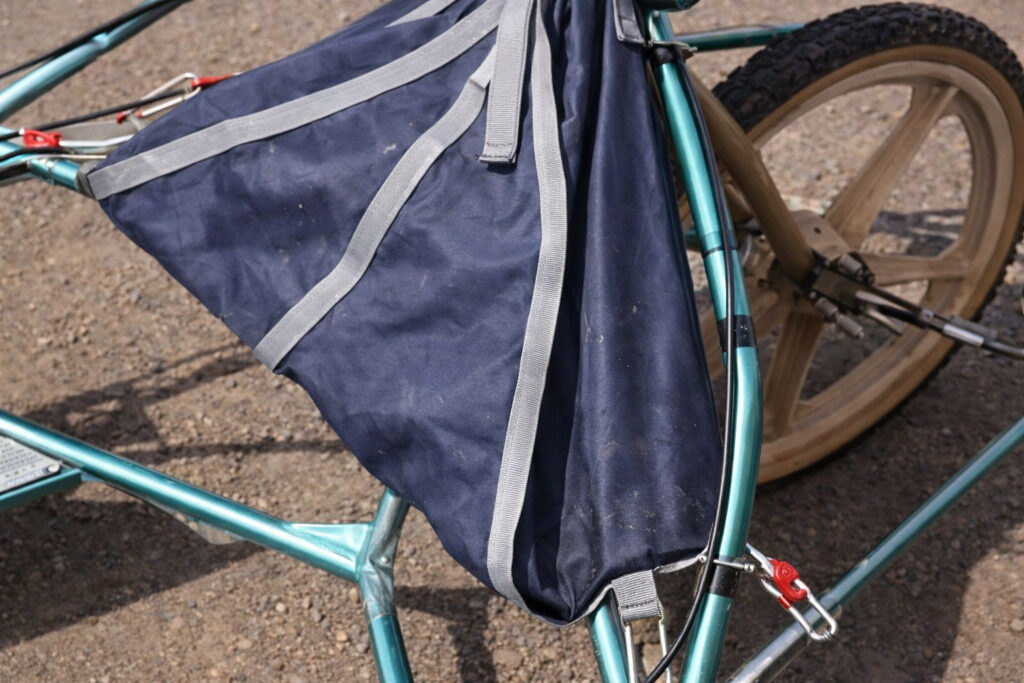
A specialized carrying device designed to safely transport a dog that needs to be removed from the running team. The bag is constructed from durable, weather-resistant material with proper ventilation and insulation features. For rigs, it typically mounts directly in front of the musher’s position using secure clips or straps, while sled versions are designed to integrate with the sled’s cargo area.
Usage Tips: Install the bag securely before each run, ensuring all attachment points are solid and accessible. Practice loading and unloading dogs into the bag during training so both musher and dogs are familiar with the process. Keep the bag clean and dry to maintain its effectiveness and comfort. For rig-mounted bags, make sure the mounting position doesn’t interfere with steering or braking. Check local regulations as some areas may have specific requirements for dog bag features or placement.
Importance: The dog bag is not just a safety requirement – it’s a crucial piece of equipment that can prevent a minor issue from becoming a serious emergency. It allows mushers to quickly remove a tired, injured, or overheated dog from the team and transport them safely back to the start/finish. Having a properly installed and readily accessible dog bag demonstrates responsible mushing practices and ensures the well-being of every dog in the team, particularly during longer runs or challenging conditions.
Clothing
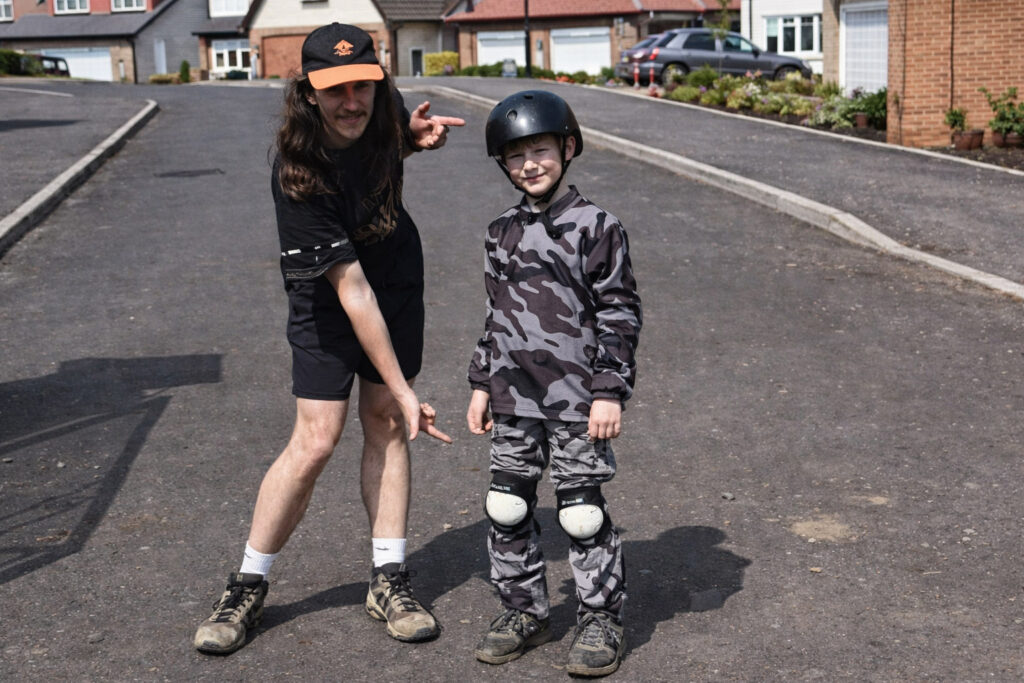
Proper mushing attire is essential for both safety and comfort during dog sports activities. The clothing system should be adaptable to changing weather conditions and activity levels, with an emphasis on moisture management and temperature regulation. Appropriate gear includes multiple layers that can be adjusted during runs.
Usage Tips: Start with a moisture-wicking base layer to keep sweat away from your skin. Add insulating middle layers that can be easily removed or added as needed. Use a waterproof, breathable outer shell to protect against wind and precipitation. Wear sturdy, waterproof footwear with good grip for running alongside or behind the rig. Avoid cotton clothing as it retains moisture and can lead to dangerous cooling. Choose clothes that allow full range of motion for running and handling the rig/sled.
Importance: Proper clothing can mean the difference between an enjoyable experience and a potentially dangerous situation. Maintaining appropriate body temperature while mushing is crucial, as you’ll alternate between periods of high activity (running, helping dogs up hills) and relatively static periods. The right clothing helps prevent both overheating and hypothermia, while ensuring you can effectively handle your dogs and equipment in any weather conditions. Additionally, appropriate footwear helps prevent slips and falls that could endanger both musher and team.
Points to note
Equipment management and maintenance are critical aspects of safe and successful mushing operations. This includes having proper transportation solutions for all gear and maintaining a comprehensive maintenance schedule for every piece of equipment used in dog sports activities.
Usage Tips: Create a dedicated storage and transport system using waterproof containers or bags to organise and protect equipment. Maintain a detailed inventory and inspection checklist for all gear. Establish a regular maintenance schedule, including daily quick checks and more thorough weekly inspections. Keep a “spares kit” with commonly needed replacement parts and tools. Document wear patterns and replacement dates for key equipment like lines and harnesses. Store equipment properly when not in use – clean, dry, and protected from extreme temperatures and UV exposure.
Importance: Proper equipment management directly impacts safety and reliability during runs. Regular inspection and maintenance help prevent equipment failures that could endanger dogs and mushers. Having an organised transport system ensures no essential equipment is forgotten and allows quick access to spares when needed. A systematic approach to equipment care also helps manage costs by extending gear life and allowing early identification of wear before catastrophic failure occurs. Additionally, well-maintained equipment demonstrates professionalism and commitment to the sport’s best practices.