A Guide to Sled Dog Racing
Sled dog sport is one of the most rewarding activities you can do with a dog. It is also one of the most misunderstood. Many people assume you need snow, a team of huskies, and years of experience before you can get involved. You need none of those things.
The UK has a thriving dryland racing scene that runs from autumn through to spring. Events take place on forest tracks and estate roads across the country, and the community is genuinely welcoming to newcomers.
Whether you have a single dog and a curious mind, or you are looking to get seriously competitive, this guide will walk you through everything you need to get started.
Is This Right for My Dog?
The most common question from newcomers is whether their dog is suitable for the sport. The answer is often yes, but it depends on the dog.
Most sled dog disciplines in the UK are open to mixed breeds and crossbreeds as well as the traditional nordic breeds. Dogs need to be physically healthy, old enough to run (typically 18 months minimum for most organisations), and comfortable working near other dogs. A dog that pulls hard on the lead is often a very good candidate for harnessed sport. That energy has somewhere useful to go.
There are a few things that will work against a dog. Serious joint problems, breathing difficulties common in flat-faced breeds, or a temperament that does not settle around other dogs are all worth considering carefully. A chat with your vet and a conversation with your local club will help you make an honest assessment.
Dogs do not need to be trained before you arrive at your first event. Clubs are used to working with beginners, and most dogs take to harness work instinctively once they understand what is being asked of them.
Do I Need a Husky?
No. While Arctic breeds like the Siberian Husky, Alaskan Malamute, and Samoyed are closely associated with the sport, they make up only part of the field at most UK events.
You will also see Alaskan Huskies (a purpose-bred racing crossbreed), Pointer and Greyhound crosses, trail hounds, and all manner of mixed breeds competing seriously and doing well.
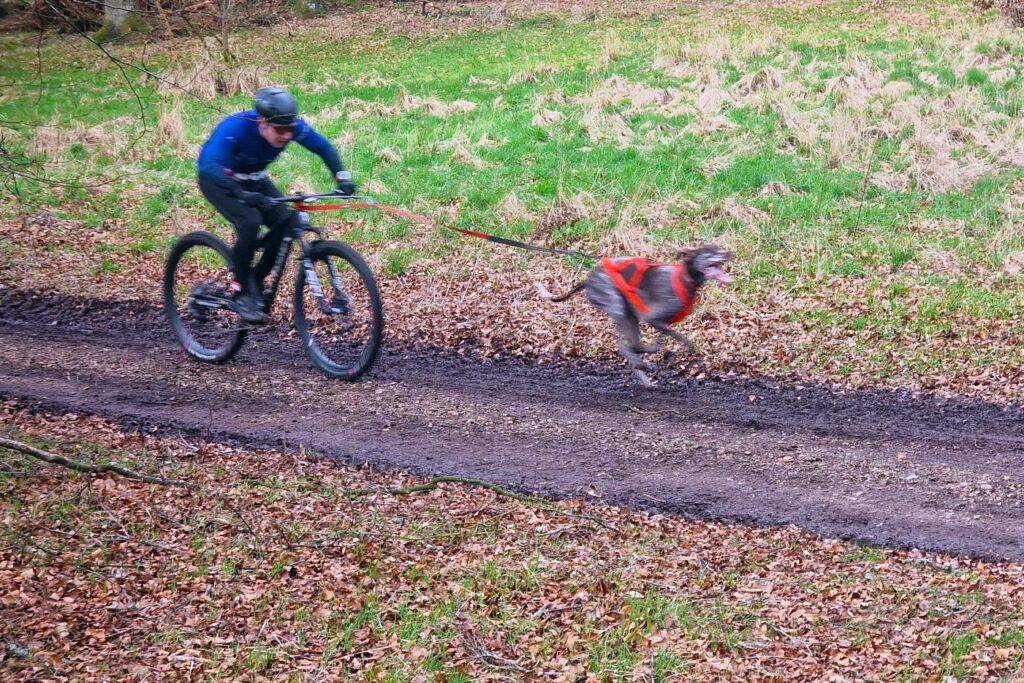
What matters is that the dog is healthy, has the drive to pull, and enjoys running. A fit Weimaraner or a keen Border Collie cross can be highly competitive, particularly in canicross and bikejoring.
If you are thinking about getting a dog specifically for the sport, speak to club members first. They will give you honest advice on what to look for and which breeders or rescue organisations have dogs suited to an active working role.
Which Discipline Should I Start With?
There are several different disciplines within sled dog sport, and the right starting point depends on what you have available: your dog, your budget, and how physically active you want to be.
Canicross
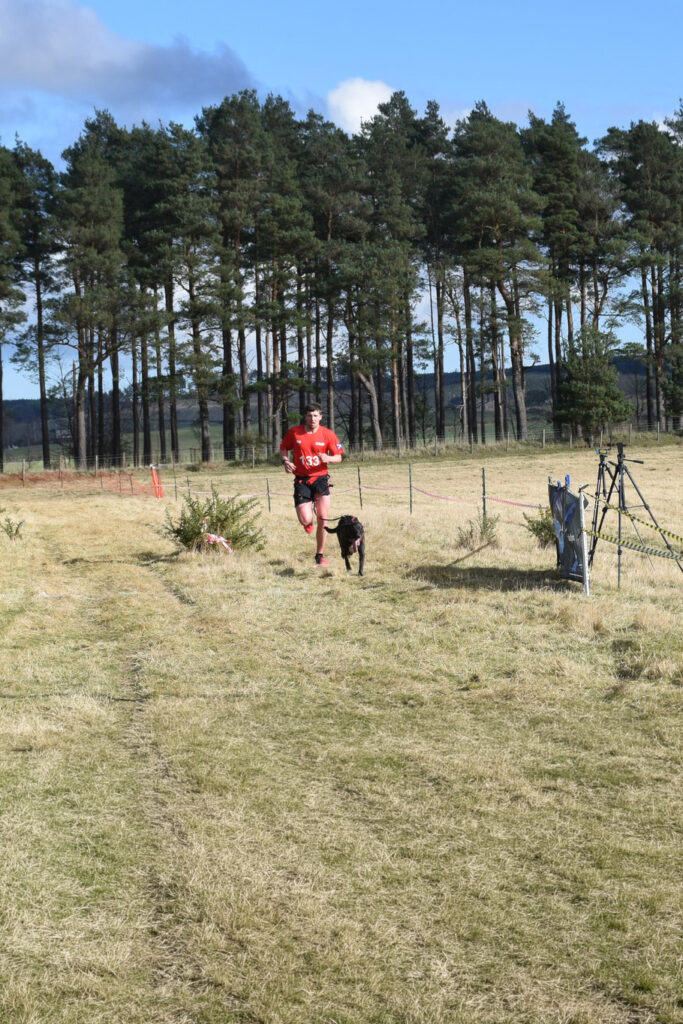
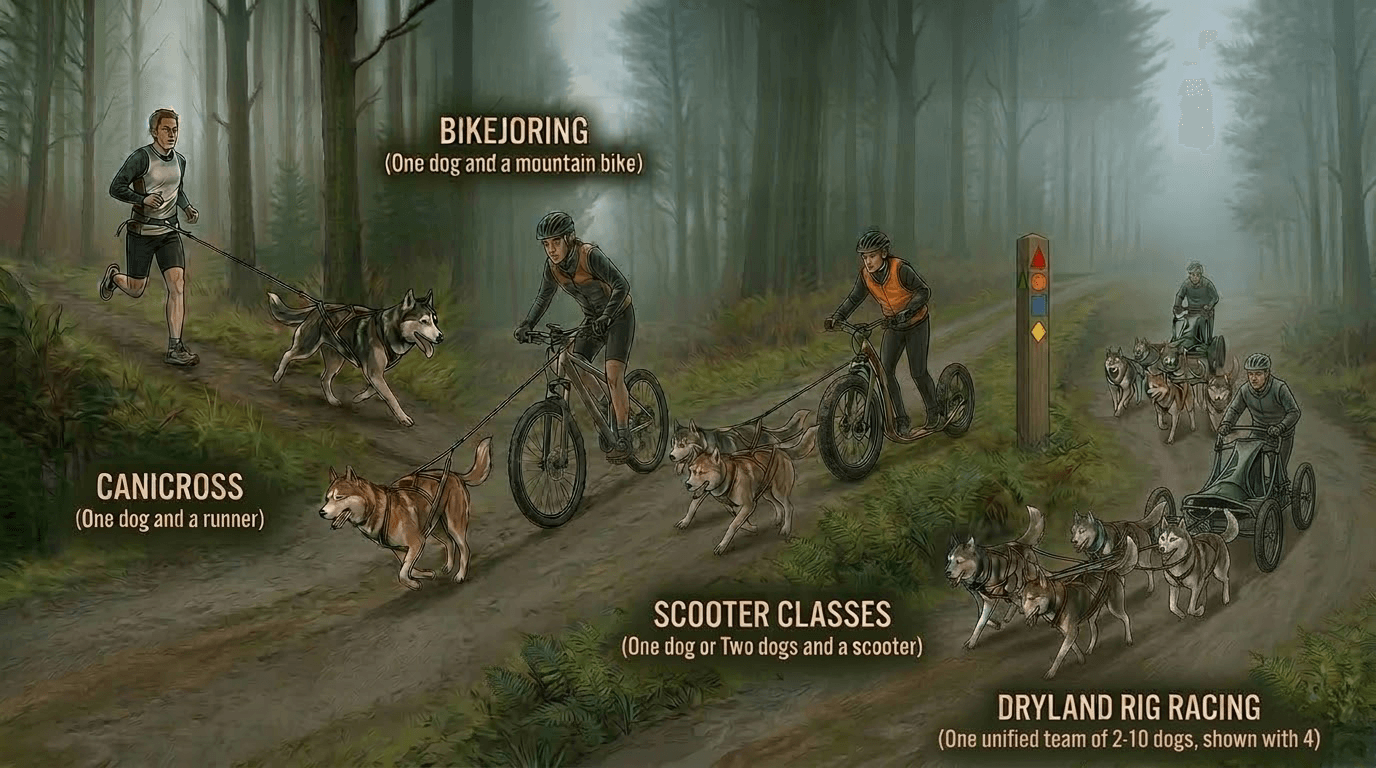
Canicross is the easiest and cheapest way to get started. You wear a waist belt and connect to your dog using a bungee line. Your dog runs in front and helps pull you along the trail. Races are typically 3 to 5 kilometres and take place on cross-country and forest courses. All you need is a waist belt, a bungee line, and a correctly fitted pulling harness for your dog. Total cost for a starter kit is usually around £60 to £100. If you are unsure whether the sport suits you or your dog, canicross is the place to find out.
Scootering
A dog scooter is a large, sturdy off-road scooter with a proper brake system. One or two dogs are connected to the front using a gangline and bungee. You stand on the scooter and assist by kicking when needed. Scootering is a natural step up from canicross and opens up a wider range of events. See our Scooter Guide for a full breakdown of equipment and costs.
Bikejoring
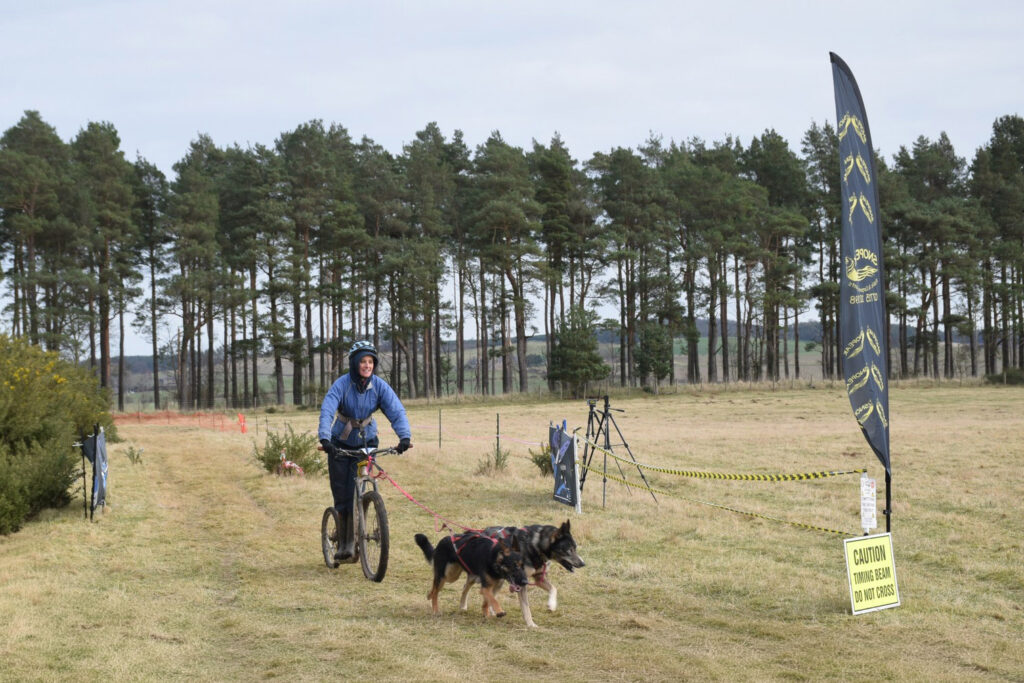
Bikejoring uses a mountain bike rather than a scooter, with a single dog connected to the front via a specialised arm that keeps the line away from the wheel. It suits confident cyclists and dogs that are comfortable running at higher speeds. The pace is fast, and races can be technical on tight forest trails.
Rig Racing
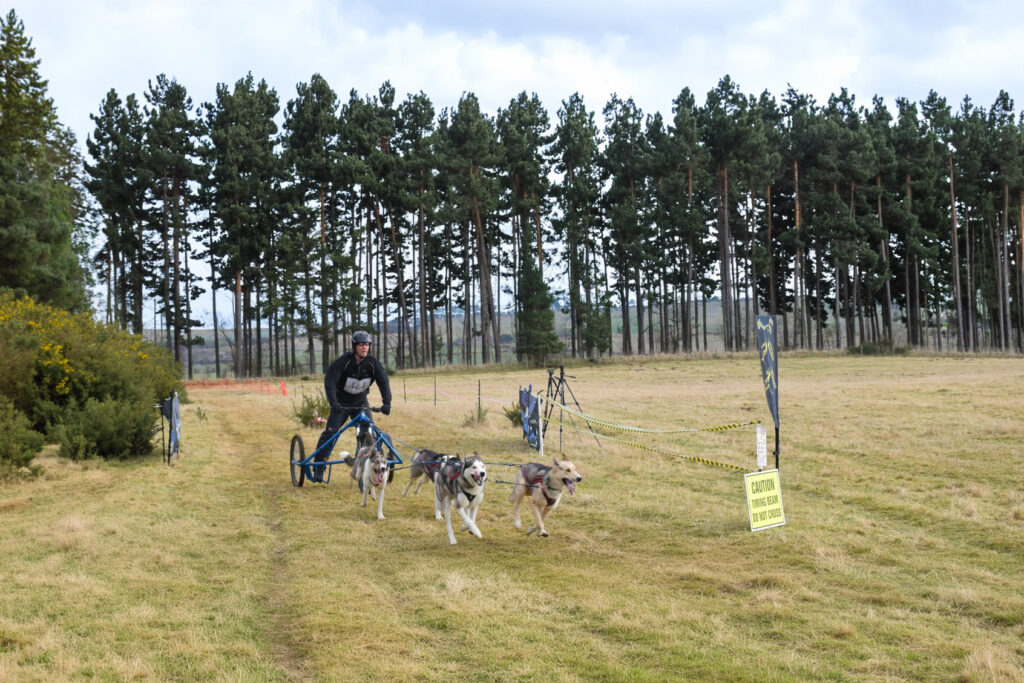
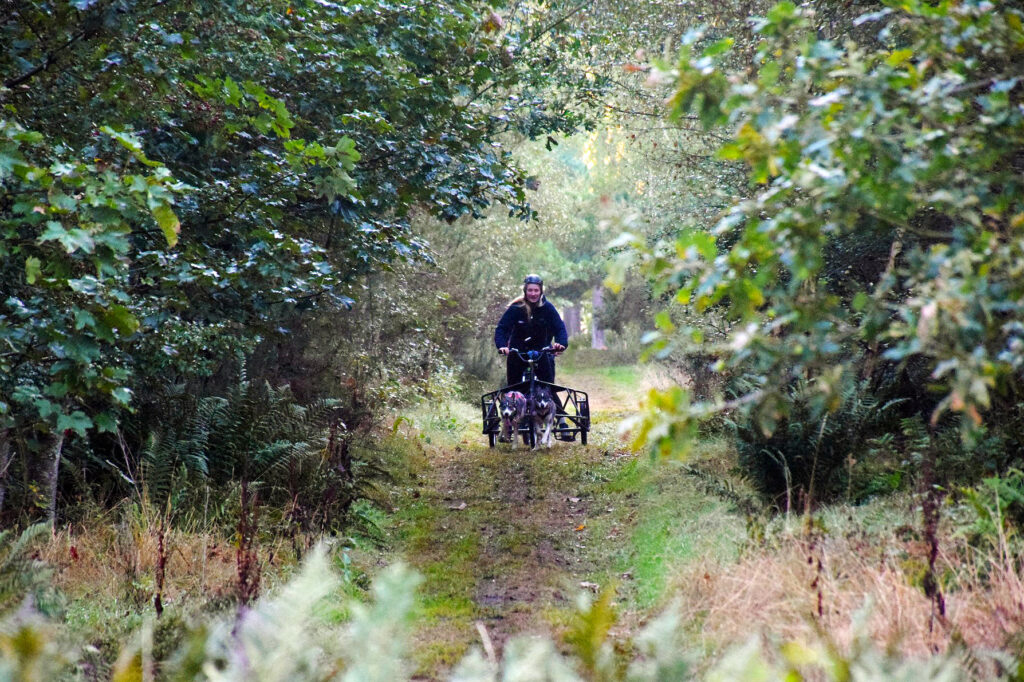
Rig racing is what most people picture when they think of sled dog sport. A lightweight four-wheeled cart is pulled by a team of four, six, or eight dogs. This is the most involved entry point in terms of equipment cost and dog numbers, but it is also where you will find the most competitive classes at UK events. Many rig racers start in canicross or scootering and build up over a couple of seasons.
Weight Pull
Weight pull is a separate discipline where individual dogs compete to pull a wheeled cart loaded with weights over a short distance. It is open to a wide range of breeds and sizes, with dogs competing against others in their own weight category. Events are often held alongside race weekends. No special vehicle is needed, making it accessible for single-dog owners.